Open Banking
A model that allows third parties to access a user's bank data through APIs, with the user's consent, opening the way for automated and seamless payments.
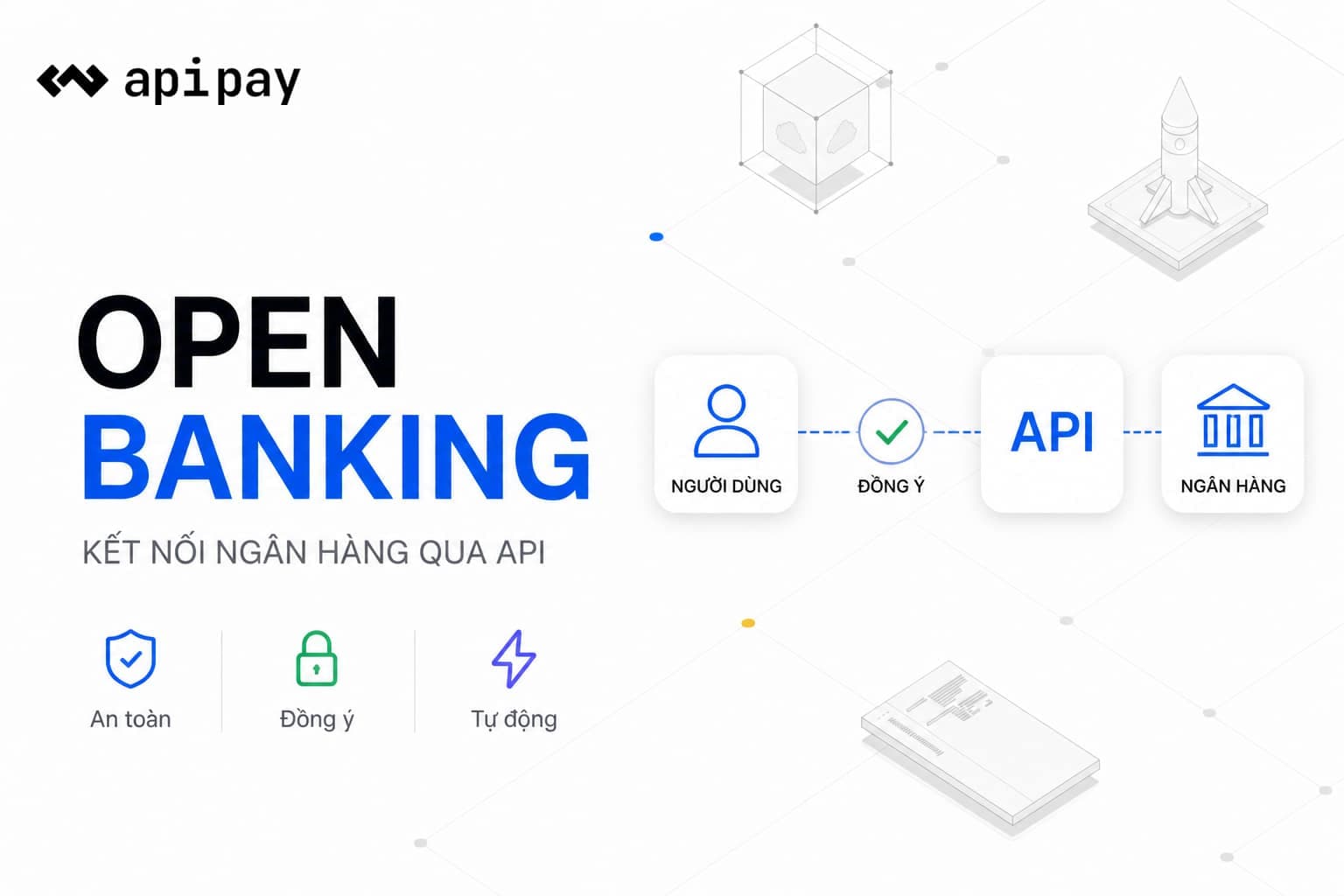
Why Open Banking exists
In the past, financial data was locked inside each bank's own system. Businesses that wanted payment integration had to sign directly with every bank, often taking weeks or months.
Open Banking creates a standardized middle layer: banks expose APIs under common standards, and third parties connect through them to read transaction data, confirm payments, and manage cash flow automatically in real time.
How it works
Three simple steps to connect with banking systems
The user grants access
Through OTP or bank-app authentication, the user agrees to share data with a third party. The process stays fully under the user's control.
The bank shares data through APIs
Transaction data is encrypted and transmitted in real time through standardized API connections. Banks share data, not passwords or transfer permissions.
The application processes the data
The system confirms orders, sends notifications, and reconciles revenue within seconds, without manual checks.
How is Open Banking different from Internet Banking?
| Criteria | Internet Banking | Open Banking |
|---|---|---|
| User | Individuals, manual actions | Systems, applications, automation |
| Communication | User to banking interface | API to API |
| Speed | Depends on user action | Real time and automated |
| Use cases | Transfer money, view balances | Confirm payments, sync transactions, manage cash flow |
Practical use cases
What ApiPay enables with Open Banking infrastructure
Automated payment confirmation
When a customer transfers money, the system detects it and updates the order within seconds, without manual checking.
Centralized cash flow management
Connect all bank accounts into one dashboard and monitor balances and transactions from multiple banks in real time.
Real-time transaction notifications
Receive instant alerts when new transactions arrive through webhooks, email, or SMS so revenue can be reconciled quickly.
Virtual Account
Each virtual account is tied to an order or customer, enabling automatic reconciliation and removing manual entry errors.
Status in Vietnam
Vietnam does not yet have a formal Open Banking framework like Europe's PSD2 or the UK's Open Banking Standard, but the State Bank of Vietnam has issued guidance encouraging banks to open APIs and cooperate with fintech companies.
Many major banks have opened APIs for partners. ApiPay is building Open Banking infrastructure to connect directly with banks and bring account verification, balance checks, and automated transaction processing to businesses.
Who should care?
Businesses with online stores
Automate bank transfer confirmation so orders update immediately after customers pay, without manual reconciliation.
Developers and technical teams
Build payment features without signing separate agreements with every bank. Integrate once through a standardized API.
Fintech startups
Use banking data infrastructure for finance, accounting, and cash-flow products that create new value.
Frequently asked questions
Feature in development
ApiPay is building Open Banking infrastructure to connect directly with banking systems. Follow this page for updates as we launch.